
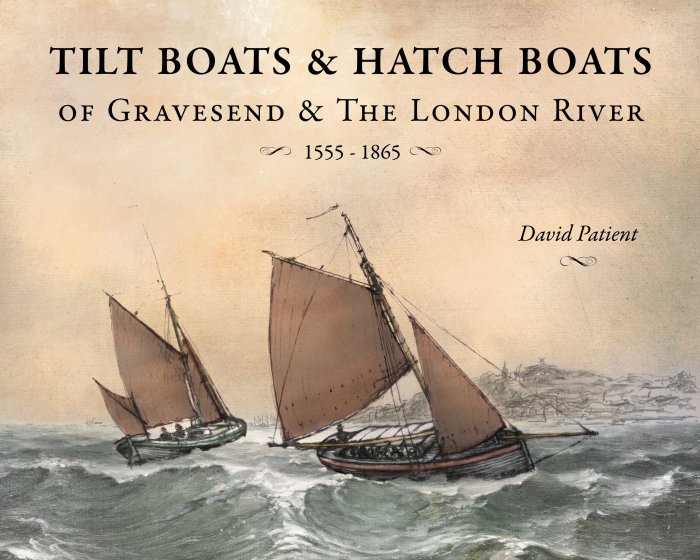
Introducing the second fascinating title from author and retired shipwright David Patient, who has spent his working life restoring craft from the Thames Estuary. His last book One of Howard’s charted the life of the pioneering Thames barge builder John Howard.
David’s ‘intimate knowledge of sailing barges is evident throughout the book, as is his research into the history and culture of the Maldon builders and sailors.’ (Mariner’s Mirror, Journal of the Society of Nautical Research, May 2021)
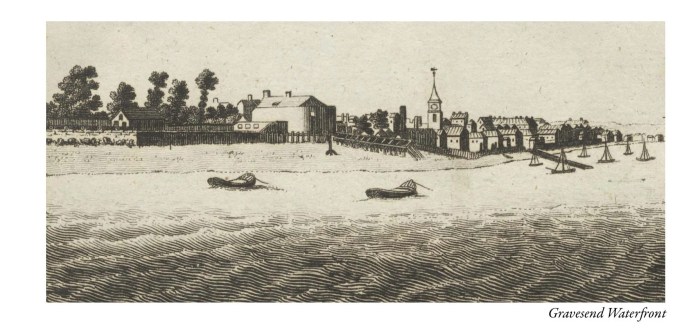
On his retirement as a shipwright, the author, David Patient, made a study of the maritime history of Gravesend in the days of sail, in particular the building and operation in the town of the Tilt Boat and Hatch Boat. The life and times of these two vessels have not before been seen in print.
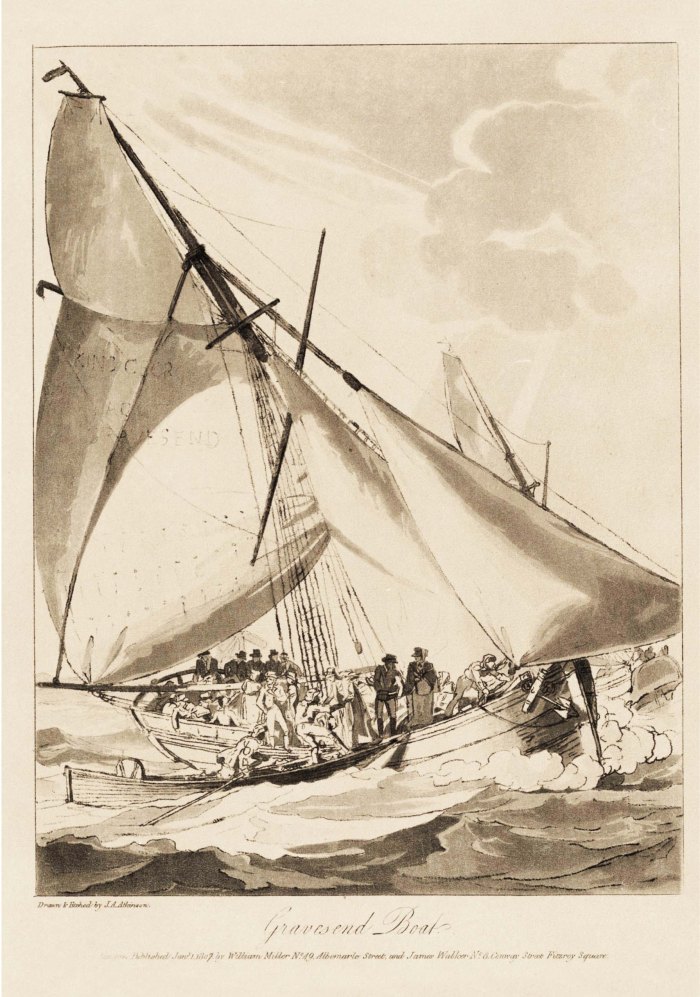
The Tilt Boat carried passengers and the Hatch Boat carried fish on the River Thames. The Tilt Boats, from the mid 16th century, served the ‘Long Ferry’ which was the ancient passage by water between Gravesend and Billingsgate in the City of London. Originally propelled by oars they finally developed into large sailing vessels called ‘Gravesend boats’.
The Hatch Boat was initially designed as an efficient sailing craft in the second half of the 18th century to swiftly transport fresh fish from Gravesend to Billingsgate Fish Market. The deep sea fishing smacks sailed to Gravesend to transfer mostly cod into the Hatch Boats.

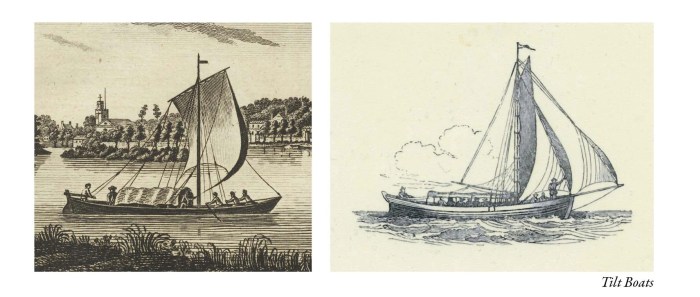
The Long Ferry was primarily run by the Gravesend Corporation in conjunction with Lord Mayor of London. Both vessels were operated by Gravesend watermen who played a part in the development of the City and their home port. Their story is therefore put into historical context.
The introduction of passenger steamers saw the end of the Tilt Boats by the 1830s and the Hatch Boats struggled on for a few decades until there was a change in the methods of fishing. Their demise left the sailing barge as the last cargo carrying vessel reliant on the wind and tide.
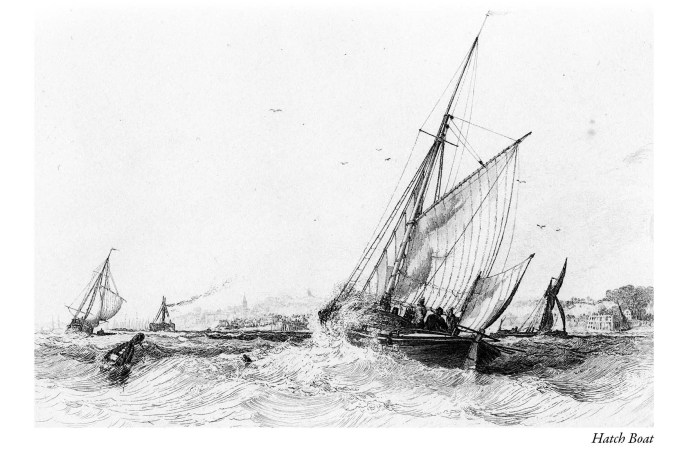
Tilt Boats & Hatch Boats
Jardine Press November 2024
ISBN 978-1-8382272-3-4
Hardback 240 x 300mm
£30 [buy]
Sponsored by the Kent Archaeological Society
 jardinepress.co.uk